Nocturnal prohibition on Purgatory ascent
The Nocturnal prohibition on Purgatory ascent is a fundamental law of the afterlife in Dante Alighieri's Divine Comedy, which decrees that no soul may climb Mount Purgatory during the hours of darkness. This rule, explained by the poet Sordello, is not a punitive measure but a consequence of the soul's own nature: without the light of the sun—a symbol of divine grace and reason—the will lacks the power to ascend, and any attempt to do so would be futile. The prohibition structures the pilgrims' journey, forcing them to pause, reflect, and seek shelter, thereby transforming the mountain's nightly rest into a period of spiritual preparation and communal waiting.
Definition and Origin of the Rule
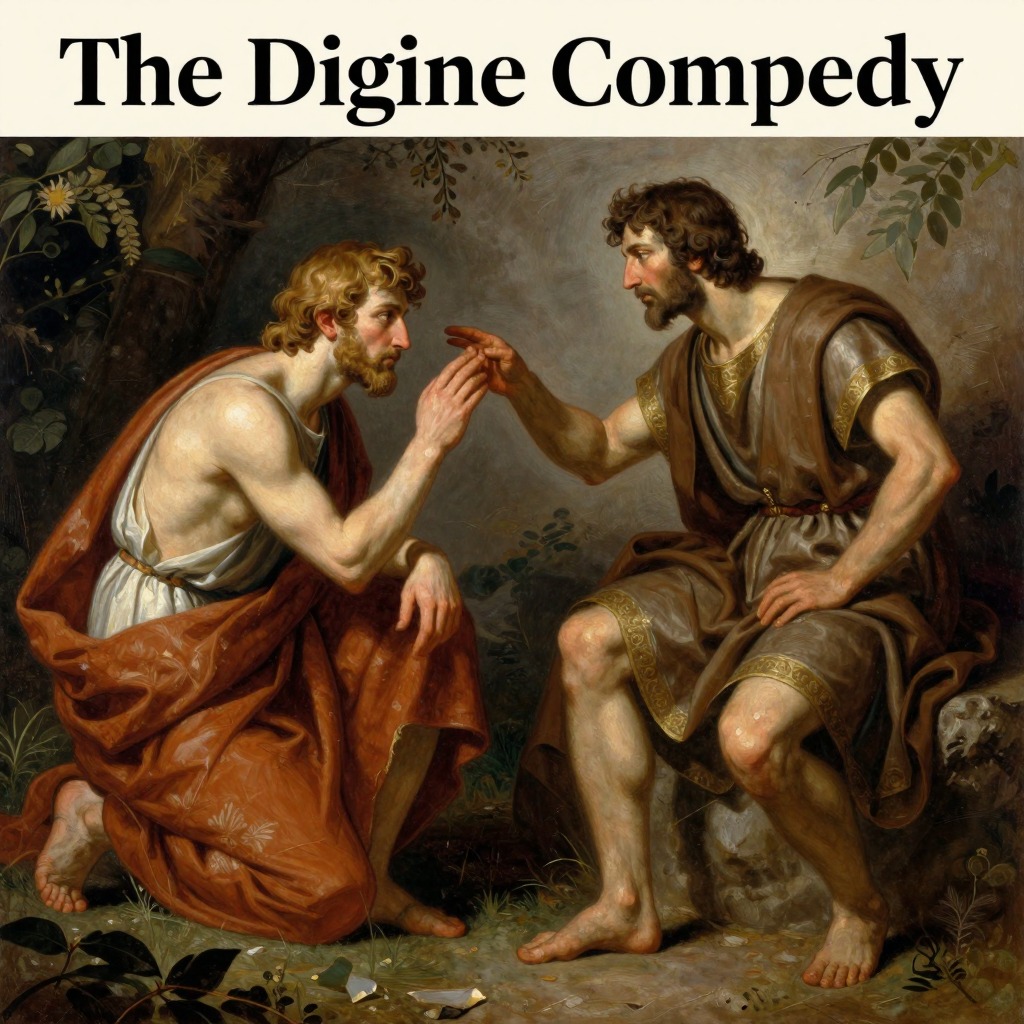
The prohibition is first articulated by Sordello, a fellow Mantuan encountered by Dante and Virgil in the Valley of the Princes. When Virgil asks whether one could ascend by night, Sordello draws a line on the ground with his finger and declares, "See, this line alone thou couldst not pass after the sun is gone" . He clarifies that the obstacle is not any external barrier but the nocturnal darkness itself: "Not that aught else would hindrance give, however, to going up, save the nocturnal darkness; this with the want of power the will perplexes" . The rule is thus rooted in the nature of the soul's will, which requires the sun's light—a metaphor for divine illumination—to find the strength and direction for ascent. Without it, the will becomes perplexed and powerless, making any attempt to climb not merely forbidden but inherently impossible.
The Rule's Operation and Consequences
The prohibition forces a nightly halt on the mountain. Sordello explains that during the night, souls may "return below, and, wandering, walk the hill-side round about, while the horizon holds the day imprisoned" . This creates a rhythm of ascent and rest, where the day is for active purgation and the night for passive waiting. The rule is absolute and applies to all souls, including Dante himself, who is still alive. When the sun sets, the pilgrims must stop, as Virgil later confirms: "We cannot go up by night" . The consequence is a forced pause that becomes an opportunity for reflection, conversation, and sleep. Dante, Virgil, and Statius, after passing through the Wall of Fire, find themselves on a stairway as night falls. Virgil says, "The sun departs, and night cometh; tarry ye not, but onward urge your steps, so long as the west becomes not dark" . They climb until the light fails, then each makes a bed of a stair, as "the nature of the mount took from us the power of climbing, more than the delight" . This nightly rest is not merely a physical necessity but a spiritual discipline: Dante falls asleep and has a prophetic dream of Leah and Rachel, which prefigures the active and contemplative lives . The prohibition thus transforms the mountain's darkness into a time for the soul to be nourished by dreams and visions, preparing it for the next day's ascent.
Thematic Significance
The Nocturnal prohibition on Purgatory ascent embodies the poem's central themes of grace, free will, and the necessity of divine aid. The rule demonstrates that the soul's journey toward God is not a purely autonomous effort but requires the cooperation of human will with divine light. The sun, which makes ascent possible, is a symbol of Christ, the "Sun of Righteousness," and of the grace that illuminates the intellect and strengthens the will. The prohibition also reinforces the structure of Purgatory as a place of ordered, gradual purification, where time and natural cycles are part of the penitential process. The night is not a time of punishment but of rest and receptivity, allowing the soul to absorb the lessons of the day and to be shaped by dreams and divine inspiration. This rhythm of labor and rest, of active striving and passive waiting, mirrors the Christian life on earth, where progress in virtue requires both effort and grace, and where periods of darkness and uncertainty are part of the journey toward the light.